The journal
Is a spiral or hardcover sketchbook better? A practical guide
how to choose a sketchbook with clear rules for spiral versus hardcover, paper weight guidance, and quick tests to match your media.
Quick answer: how to choose a sketchbook right now
Short verdict by use case
If you mainly work one page at a time, often sketch on crowded trains or tight desks, or want the option to fold the book back, a spiral binding is usually the better starting point. If you need strong cover protection, want true uninterrupted two page spreads, or carry wet media that benefits from a rigid support, a hardcover casebound book is the safer choice.
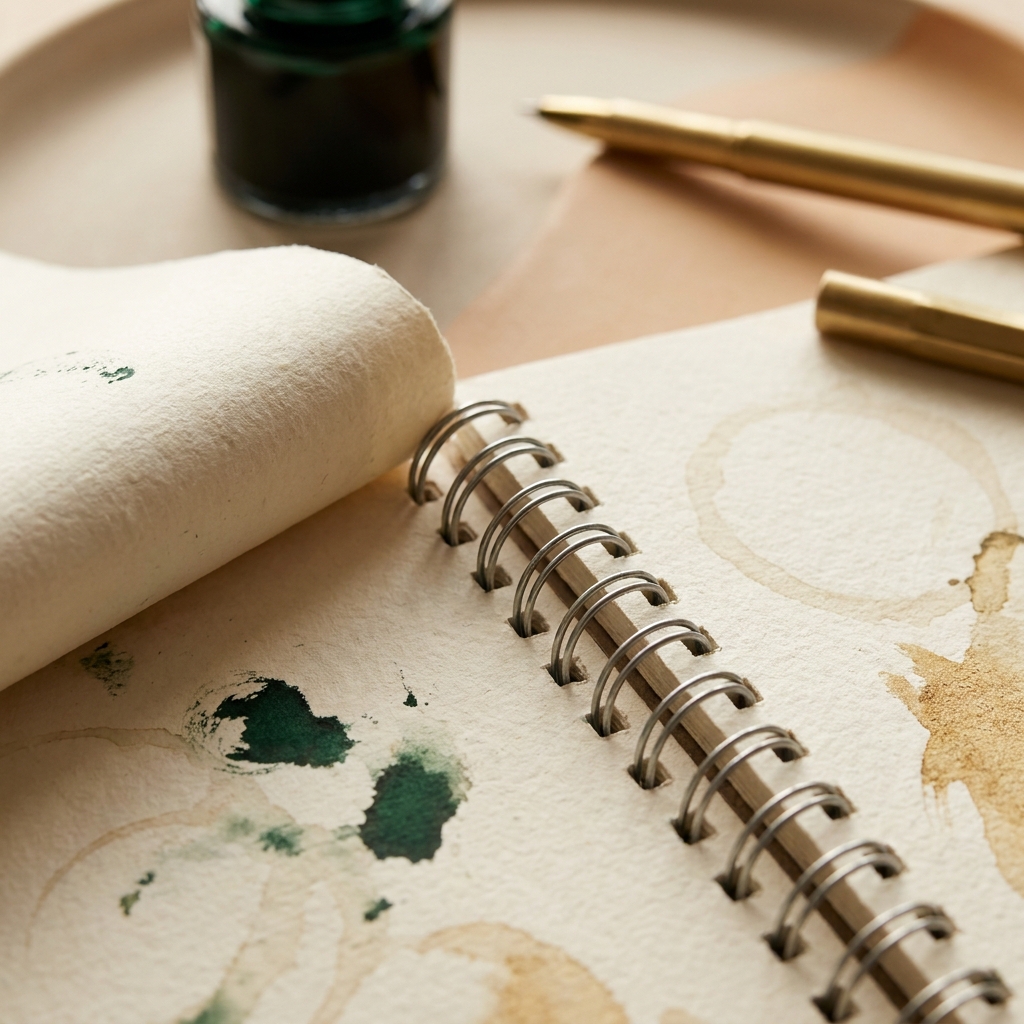
These are practical trade offs rather than absolute rules: spirals lie flat and fold back for compact use, while hardcovers protect pages and offer flatter sewn spreads for panoramas, so match the format to how you work and what you carry.
When longevity matters, choose acid free, lignin free papers and store books in buffered enclosures to reduce long term deterioration.

How to test quickly before you buy
When you are deciding in store or online, bring or request a small swatch of the actual paper type or test one page with your primary tools. Try the inks, markers, or washes you use most and check for buckling, show through, feathering, and how the surface takes a line.
If you can only judge from a product page, look for explicit specs: gsm, surface description, and archival labeling. If those specs are absent, prefer a retailer that supplies swatches or asks the manufacturer for a sample.
Binding and format: what spiral and hardcover actually do for your process
How spiral bindings behave in use
Spiral bound sketchbooks generally lie flat and can fold back on themselves, which makes them handy on tight surfaces, lap work, and when sketching with one hand free. The coil lets you work on a single page without a bulky book getting in the way, and many spirals include perforations for clean page removal when you want to scan or frame a sheet.
A guide to sketchbooks
How hardcover/casebound books behave in use
Hardcover, casebound sketchbooks protect the block and often use section sewing or stitched signatures that allow flatter gutters and uninterrupted two page spreads, which suits panorama work or compositions that cross the center fold. The rigid covers also double as a firm drawing surface when folded under or when used on a lap.
Spiral vs Hardbound Sketchbooks
Durability and transport differences
For transport and frequent handling, hardcover books tend to be more robust because rigid covers and sewn or glued blocks protect page edges and corners. By contrast, wire coils can bend, snag, or deform in a bag, though that same coil allows pages to detach cleanly when perforations are present.
Choose spirals when you need quick access and fold back convenience; choose hardcovers when you need protection and cleaner cross spread composition.
How to choose a sketchbook
Paper and media: choosing weight, surface and sizing for your tools
How gsm and lb relate to warping and show-through
Paper weight is most often reported in grams per square meter, gsm, and sometimes in pounds; heavier stocks generally resist warping and show through better, which matters for wet media and heavy layering.
Paper 101
Surface choices: smooth versus cold press or textured
Smoother plates are preferred for graphite, technical pens and fine liners because they give crisp lines and reduce tooth interference with details. If you do a lot of line work, this surface reduces nib drag and keeps edges cleaner.
A guide to sketchbooks
Is a spiral or hardcover sketchbook better for my work?
A spiral sketchbook is better when you need fold back convenience and quick single page access; a hardcover sketchbook is better when you need protection, support for two page spreads, and greater durability in transit. Pick paper and size to match your media and test a sample page before you buy.
Sizing, absorbency and wet media performance
For watercolor and gouache, look for well sized, heavier papers, commonly cold press, that handle pigment and water without severe buckling; manufacturers often recommend 300 gsm or higher for consistent results with washes and layered gouache.
For markers, choose bleed resistant or marker specific stocks designed to limit feathering and show through, and test alcohol markers on a sample to check whether color layering will behave as you expect.
Paper 101
A simple decision framework: five questions to pick the right sketchbook
The five questions and why they matter
Answer five short questions to rank a sketchbook quickly: primary medium, need for uninterrupted spreads, how you carry the book, whether you want removable pages, and whether archival permanence is needed. Assign a score of 1 to 5 for each and total the result to guide format and paper priority.
Storage Enclosures for Paper Artifacts
Five question quick score to choose a sketchbook
How to score options quickly when shopping
Weight answers toward paper when you use wet media, and weight answers toward binding and portability when you sketch on the move. For example, a watercolorist should prioritize gsm and sizing first, while an urban sketcher who uses pens may prioritize coil and fold back convenience.
A guide to sketchbooks
Common mistakes, buying checklist and what to avoid
Typical pitfalls newcomers make
A common mistake is choosing a sketchbook by cover appearance alone without checking paper weight, surface, or archival labeling. Another is assuming that every product labeled watercolor or sketchbook uses the same sizing or gsm; specs vary and matter for performance.
Paper 101
A final buying checklist you can use in-store or online
Bring this short checklist when you shop or review product pages: format (spiral or hardcover), paper weight in gsm, surface type, archival labeling (acid free, lignin free), binding type, and whether pages are removable or perforated. Use the answers to score options by the five question framework above.
Avoid assuming that a low price or attractive cover compensates for poor paper specs if your work needs certain handling characteristics.
Storage Enclosures for Paper Artifacts
Practical examples and scenarios, then a short conclusion
Three short scenarios with recommended formats and paper specs
Commuter urban sketcher: If you use ink and markers, a mid weight spiral with a marker friendly stock is often the most practical choice because you can fold the book back and work on a single page without disturbing a spread. Check the paper specs and test markers on a swatch before you buy.
A guide to sketchbooks
Plein air watercolorist: For outdoor water based work, prefer heavier, cold press papers rated for watercolor and 300 gsm or more. A casebound book with a sewn or stitched block gives a sturdier travel companion and preserves two page spreads when you want large compositions.
Paper 101
Mixed media sketchbook for study and final pieces: If you want the best of both worlds, choose a format that matches how you carry your work. A hardcover with heavier pages protects finished drawings, while a spiral for practice pages keeps quick sketches accessible. Test the actual paper to confirm performance.
How to choose a sketchbook
Final takeaway and next steps for testing
The simplest next steps are consistent: identify your dominant media, request or test a paper swatch, check for acid free and lignin free claims if longevity matters, and score your options with the five question checklist. That practical routine reduces buyer regret and helps you find a book that supports how you actually work.
Frequently asked questions
Should I pick spiral or hardcover for ink and pen work?
For ink and pen work, either format can work; pick a smooth surface paper and choose spiral if you need fold back convenience, or hardcover if you want protection and clean two page spreads.
What paper weight is safe for watercolor in a sketchbook?
A watercolor sketchbook should use well sized papers at 300 gsm or higher for reliable buckling resistance with washes.
Does archival labeling matter for sketchbooks?
Yes, acid free and lignin free papers are recommended when longevity is important, and buffered storage helps preserve work.
If you want one concrete action, test a single sheet with your primary tool and use that outcome to guide paper and format choices. Keep a lightweight scoring routine and refer back to it when selecting a new sketchbook, and store finished work in buffered enclosures if longevity matters. If you create across multiple media, consider keeping two books: one for quick, portable practice and one for finished or archival pieces.
References
- https://shop.artnoise.ca/blogs/art-supplies-guides-and-studio-tips/how-to-choose-sketchbook-paper-weight-binding-size?srsltid=AU7gw4W4l979p_yS-zRG_ijeahHYzdiMqUk5W6mUf_ZEeJfM1PTMFlES
- https://www.wellappointeddesk.com/2021/07/sketchbook-review-8-random-sketchbooks-including-hot-takes/
- https://mixam.com/blog/education/beginners-guide-to-paper-weight-and-thickness