The journal
What are the common causes of creative block? Practical causes and fixes
how to overcome creative block with a recovery-first framework that combines attention hygiene, warm-ups and short experiments.
What creative block is and the common drivers
Creative block is a temporary drop in idea fluency, novelty or motivation that makes it hard to start, continue or finish creative work; it is not a permanent trait of the creator. If you are asking how to overcome creative block you are usually describing moments when ideas feel scarce, options feel limited, or the next step seems unclear, rather than a fixed lack of talent.
Creators describe block in three overlapping ways: a loss of mental energy, a narrowing of choices, or a process stall where the steps to move forward are missing. These map cleanly to three driver categories: internal, external and process.
Internal drivers include perfectionism, fear of negative judgment and burnout. Burnout and sustained workplace stress reduce the energy and efficacy needed for creative thinking, which can undermine cognitive flexibility and the ability to recombine ideas, according to the World Health Organization's occupational framing of burnout WHO definition of burnout.
External drivers cover time pressure, strict deadlines and social evaluation. Tight deadlines, especially under close evaluation, are often linked with reduced originality because they push creators toward safer, conventional choices analysis of deadline effects.
Process drivers are gaps in the workflow: unclear briefs, missing subskills, irregular routines or the absence of a warm-up. When the brief is ambiguous or the routine is broken, decision costs rise and momentum slows; sometimes what looks like block is actually a skills mismatch.

Use this quick self-check to identify which driver category fits your situation:
- Internal check: Are you exhausted, easily overwhelmed, or avoiding work because it feels draining?
- External check: Are you under tight deadlines, intense evaluation, or constant interruptions?
- Process check: Is the brief unclear, do you lack a small technique needed to proceed, or have you skipped your normal warm-ups and rituals?
If more than one item applies, the categories often interact: chronic stress lowers the threshold for distraction, and unclear briefs increase the perception of urgency.
What are the most common drivers of creative block and how should I decide which fix to try first?
The most common drivers are internal factors like burnout and fear, external pressures such as tight deadlines and evaluation, and process problems like unclear briefs or missing skills. Start with a short diagnostic: if you are chronically exhausted prioritise recovery; if interruptions dominate protect attention; if a step is missing do a targeted skill drill.
Below we move from identification to the cognitive mechanisms that make these drivers effective at suppressing idea flow.
How stress, evaluation and distraction suppress creative thinking
Burnout and executive function
Creativity depends on executive functions such as cognitive flexibility and working memory, which act like a mental mixing bowl where ideas are held and recombined. Chronic stress and burnout reduce these capacities by draining cognitive energy and making sustained focus harder, a relationship noted in occupational definitions of burnout WHO definition of burnout.
When working memory or flexibility is impaired, generators of novel combinations tend to stall because it becomes harder to hold several idea fragments at once and test new pairings. The result is fewer divergent ideas and more repetitive solutions.
Deadlines and evaluation: when pressure reduces originality
Time pressure and the threat of judgment narrow risk-taking. Studies show that tightly timed tasks under close evaluation consistently produce fewer original ideas than tasks with more open time and lower stakes, which suggests that high evaluation pressure reduces idea fluency creativity under deadlines.
Moderate constraints can help by focusing effort on execution rather than exploration, but when constraints are paired with uncertainty about how the work will be judged, creators tend to favor safe options instead of novel experiments.
Environmental distraction and the cognitive cost
Even the mere presence of personal technology, such as a smartphone, reduces the cognitive capacity available for creative recombination because it holds attention in readiness for interruption. That reduction in available capacity lowers the mental bandwidth for holding and mixing ideas study on smartphone presence.
Practical consequence: what looks like a lack of imagination may actually be a reduced ability to keep idea fragments in mind long enough to test combinations. Reducing constant cues and interruptions restores the working space creativity needs.
How to overcome creative block: a practical four-part framework
This framework orders actions by what to try first: recover the system, protect attention, reboot the process and fix specific skills or brief gaps. The priority rule is simple: if signs of burnout or chronic stress are present, start with recovery before applying productivity tactics; this aligns with occupational guidance on burnout.
Part 1: Recover the system
If you feel chronically exhausted, listless or unable to sustain focus for routine tasks, treat recovery as the first intervention. Recovery actions are sleep hygiene, workload limits and boundary setting. Even small sleep improvements and clearer boundaries reduce background stress and restore basic cognitive resources.
Practical steps: set a 30-minute wind-down before bed, protect at least one daily no-meeting block, and ask a manager or partner to redistribute a specific task for a short period. These steps lower sustained load and make other interventions effective.
Part 2: Protect attention
Once basic recovery is underway, protect cognitive capacity deliberately. A core tactic is time-boxing single-task sprints: set 25 to 90 minute focused windows with a single, narrow goal and a short warm-up before each sprint. Time-boxes lower switching costs and reduce the friction of starting.
Clear device boundaries help. Place phones out of reach or in airplane mode during sprints, and turn off nonessential notifications for defined intervals, because the mere presence of devices reduces available cognitive capacity and harms sustained attention research on device presence.
Part 3: Reboot process
Use warm-up exercises and low-stakes exploration to reduce evaluation pressure. A warm-up can be a five-minute freewriting task, a quick sketch, or an unrelated micro-problem solved in ten minutes. These activities loosen rigid expectations and restore idea fluency.
Scheduled incubation helps: work on the problem for a focused sprint, then deliberately switch to a different, low-demand task for 30 minutes to several hours. Incubation allows unconscious recombination and often produces better ideas when you return.
Part 4: Skill and brief fixes
If you repeatedly hit a procedural barrier, check whether the task requires a specific technique you do not have. A short targeted learn session, a twenty-minute tutorial or a one-hour practice can often convert a skills gap into productive action.
Clarify the brief with a tiny experiment: define the smallest viable test you can do in a single sprint. That reduces ambiguity and converts a stalled process into measurable iterations. When skills are the problem, small practice beats longer unfocused effort.
Choosing the right strategy: decision criteria and quick diagnostics
When you feel stuck, the first step is a quick diagnostic to choose whether to recover, protect attention or learn a skill. Below are three short questions that guide the decision.
Answering these accurately helps direct effort to the highest-leverage fix and avoids common mistakes like using productivity hacks while burned out.
Quick diagnostic to pick recovery, attention or skill focus
How to read the checklist: if you answer yes to the first item on more days than not, prioritise recovery. If interruptions or device presence dominate, prioritise attention rules and time-boxing. If the third item is true, schedule a short targeted practice session.
Common mistakes and sticking points when tackling creative block
Mistake: trying productivity tricks while burned out. Shortcuts like tighter deadlines or longer sprints rarely work when cognitive resources are depleted; occupational guidance treats burnout as a workload and boundaries problem that must be addressed first WHO note on burnout.
Mistake: increasing evaluation too early. Inviting feedback before you have loosened up with warm-ups or low-stakes drafts tends to push output toward safe, conventional answers rather than novel ones. Reshape feedback moments to be exploratory and nonjudgmental at first.
Mistake: confusing a skill gap with lack of effort. If the work repeatedly fails at the same procedural step, try a focused skill drill or a one-hour tutorial rather than more of the same unfocused work.
Practical scenarios and a simple 7-day reset plan
Scenario A: tight-deadline knowledge-work project
Situation: You have a short deadline and need original options for a client, but ideas keep feeling derivative. Step 1: carve two 45-minute single-task sprints dedicated to idea generation, with the phone out of reach and no email during the sprints. Step 2: start each sprint with a five-minute warm-up (rapid note capture on one theme) to prime idea fluency. Step 3: use one sprint for breadth, the other for rapid convergent editing.
Rationale: time-boxing and warm-ups reduce switching costs and rebuild idea fluency while protecting attention from distraction, which is important because tight deadlines under evaluation tend to narrow originality deadline and evaluation research.
Scenario B: solo artist in a longer-term slump
Situation: You feel stuck for weeks and the work feels joyless. Step 1: treat three days as recovery days focused on sleep hygiene and workload boundaries. Step 2: introduce a 20-minute morning warm-up that is unrelated to the stalled project. Step 3: schedule two micro-experiments each week where the outcome is intentionally low-stakes.
Rationale: longer slumps often reflect accumulated stress and habitual evaluation pressure; prioritising recovery and low-stakes play reduces pressure and lets curiosity return meta-analysis on stress and creativity.
Seven-day reset: a compact, repeatable plan you can try now.
- Day 1: Recovery focus. Sleep target and a 30-minute evening wind-down; reduce scheduled meetings by one block.
- Day 2: Attention rules. Phone out of sight for two focused sprints of 45 minutes each; short walks between sprints.
- Day 3: Warm-ups. Start each work session with five minutes of freewriting or sketching unrelated ideas.
- Day 4: Incubation. Do one timed sprint, then schedule a low-effort activity for 60 to 180 minutes to allow unconscious recombination.
- Day 5: Skill check. Identify one small technique you can practice for 30 to 60 minutes.
- Day 6: Low-stakes output. Create one short, non-final piece to remove evaluation pressure.
- Day 7: Review and iterate. Count ideas, note novelty signals and decide what to repeat or escalate.
Repeat the reset if you see modest improvement. If chronic stress or burnout persists after several attempts, the reset is a bridge and you should consider longer-term workload or boundary changes and, if appropriate, professional help.
Putting it into practice: what improvement looks like
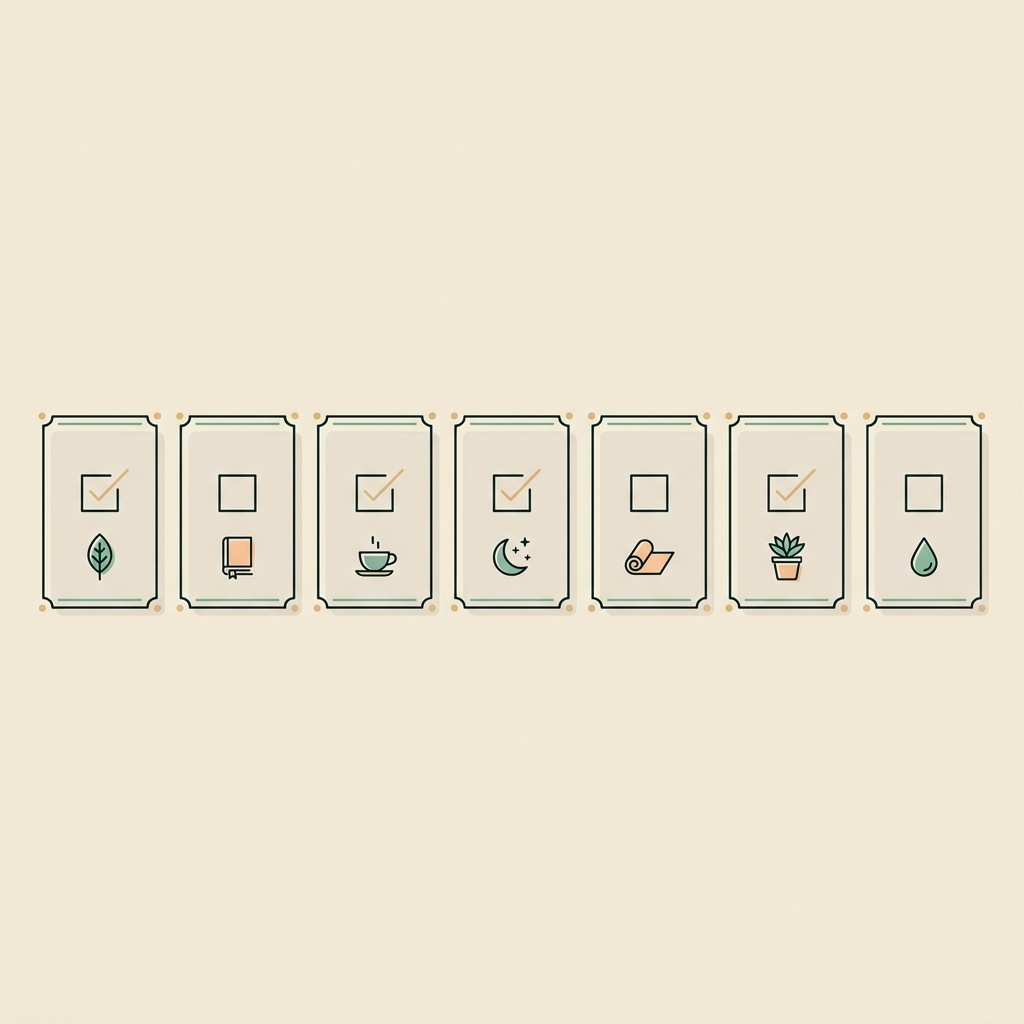
Short-term metrics: in 48 to 72 hours you should see more idea starts, slightly less inner criticism when drafting, or easier initiation of a short sprint. Use simple counts: how many distinct ideas did you list in a sprint, and how many felt at least somewhat novel?
If you see none of these signals, reassess the diagnostic questions: increase recovery time if sleep and mood are poor, tighten attention rules if interruptions are frequent, or schedule a skill session if the same procedural block repeats.
Over weeks, consistent routines of warm-ups and protected sprints tend to increase idea fluency and lower the emotional cost of starting.
Final quick reference: micro-routines you can copy
Two micro-routines you can try this week: Routine A for tight deadlines: 10-minute warm-up, 45-minute sprint, 15-minute break, 45-minute sprint. Routine B for longer slumps: 20-minute low-stakes play, 60-minute focused practice, end with a five-minute jot of questions to seed incubation.
Both routines combine recovery, attention hygiene and process clarity. Change only one variable at a time and track small signals of improvement.
Frequently asked questions
What is the fastest first step when I feel creatively blocked?
Do a quick diagnostic: if you feel chronically tired, prioritise recovery; if interruptions dominate, impose device rules and time-boxed sprints; if a method is missing, do a short targeted practice.
Can deadlines ever help creativity?
Moderate constraints can focus execution, but tight deadlines combined with high evaluation often reduce originality; use constraints carefully and pair them with warm-ups to preserve idea fluency.
How long before I see improvement?
You can notice small changes in 48 to 72 hours such as more idea starts or easier initiation; durable change usually requires consistent routines over weeks and addressing workload if burnout continues.
Creative block is usually a solvable state, not a defining trait. By diagnosing whether stress, attention or skills are the dominant problem and applying the matching fix, most creators can recover momentum in days and rebuild better routines over weeks. If you suspect chronic burnout or severe mood changes, consider reaching out to a health professional for support; the steps here are practical first aids but not a substitute for clinical care.
References
- https://nesslabs.com/creative-burnout
- https://hbr.org/2002/08/creativity-under-the-gun
- https://www.journals.uchicago.edu/doi/10.1086/691462
- https://pmc.ncbi.nlm.nih.gov/articles/PMC9703964/
- https://psycnet.apa.org/doiLanding?doi=10.1037%2Fa0015409
- https://luiswester.com/projects/
- https://luiswester.com/sitemap-0.xml
- https://www.dropbox.com/resources/creative-burnout